CFTC chair Selig says Hyperliquid-style onchain venues must register or partner with an exchange to serve US traders
Speaking at The Hill and The Block's Capitol Crypto Forum on November 19, 2026, CFTC Chairman Michael Selig said onchain derivatives platforms like Hyperliquid can reach US retail only by obtaining their own exchange license or partnering with a registered one, pointing to Backpack as the model.
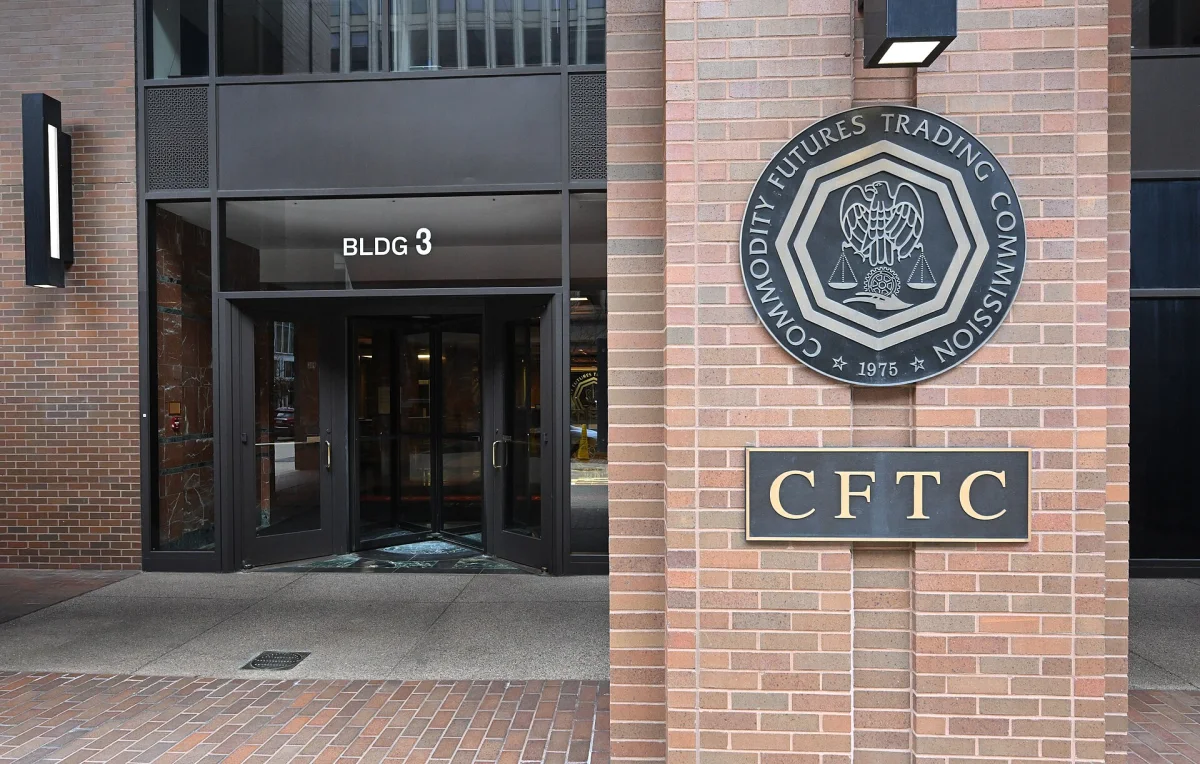
The top US derivatives regulator has spelled out how decentralized trading venues such as Hyperliquid could legally reach American retail traders — and it is not a carve-out. Speaking on Thursday, November 19, 2026, at The Hill and The Block’s Capitol Crypto Forum, Commodity Futures Trading Commission (CFTC) Chairman Michael Selig said onchain derivatives platforms have two options: obtain their own exchange registration or partner with a venue that already has one. They can keep using blockchain technology, he said, but must follow the same rules as every other exchange.
Two routes, no exemption
“You’re going to have to come in and partner with an exchange or obtain your own exchange,” Selig said in the interview, as quoted by The Block and Blockonomi. He was answering a question about how a decentralized platform like Hyperliquid could serve US customers.
The first route is full registration — becoming a designated contract market (DCM) and having trades cleared through a registered derivatives clearing organization (DCO). The second is a partnership with an exchange that already holds those licenses. According to Crypto Briefing, Selig stressed that either way customer-facing activity has to run through approved intermediaries and meet anti-money-laundering requirements, while blockchains can still be used to execute and settle trades.
Neither path exempts a platform from existing rules on customer protection, surveillance and financial resources. The message is that the technology is acceptable; operating outside the perimeter is not.
Backpack as the template
Selig pointed to Backpack as the example of the first route. As we reported, the CFTC designated Backpack’s TLD Markets as a contract market on November 16, three days after registering its clearing arm as a DCO. The Block reports that Backpack now holds three licenses — DCM, DCO and futures commission merchant (FCM) — which the company described as “the full regulatory stack for Backpack’s U.S. entry.” Reports differ on the exact date of the FCM approval.
The partnership route already has a high-profile candidate. In October, Intercontinental Exchange agreed a deal to bring regulated perpetual futures to US retail built on Hyperliquid technology. Cryptopolitan, citing Galaxy Research, says the planned venue with Trade[XYZ] would use identity verification and a permissioned version of Hyperliquid’s HIP-3 technology, and still needs regulatory approval.
What it does not mean for Hyperliquid
Selig did not approve Hyperliquid. Both Crypto Briefing and Cryptopolitan note the platform has not received approval to serve US retail traders and currently restricts US users. Crypto Briefing describes the registration-or-partnership framework as “a potential route, not an announced plan,” with no sign that Hyperliquid has applied for a license or struck a partnership of its own.
The remarks land amid a fight over how perpetual futures should be classified. Selig said perps are “structured as futures contracts; they’re not structured as a swap or as a security-based swap,” and argued that because a perp “doesn’t have an expiration date,” funding payments work much like variation margin. Cryptopolitan, citing Reuters, reports that CME Group and a group associated with Cboe and Citadel Securities have challenged in court the treatment of perps as futures rather than swaps.
States and prediction markets
Selig also addressed state challenges to CFTC-regulated platforms, mainly prediction markets. “If it’s a legal and lawful derivative, it should be regulated by the market regulator,” he said, adding: “It’s not something that goes to the state.” The Block reports the CFTC sued Utah alongside the US government in October and sued Arkansas and Louisiana on November 13, and that Selig said the agency would work with the Justice Department when states go after federally registered platforms. He also said the CFTC has no business regulating casinos or state-licensed gambling venues.
Why it matters
For US traders, the practical outcome is that offshore onchain perps venues will stay off-limits unless they bring their operations inside a registered structure. For the platforms, the cost of entry is now clear: licensing, or giving a licensed partner control of onboarding, custody and surveillance. For a broader view of how rules differ across markets, see our guide to crypto regulation by country.
FAQ
Can Hyperliquid now serve US retail traders?
No. Selig described two routes into the US market, but Hyperliquid has not been approved and, according to reports, restricts US users. There is no announced plan for it to register or partner.
What are the two routes Selig described?
An onchain platform can obtain its own exchange registration (as Backpack did with DCM and DCO licenses) or partner with an exchange that is already registered with the CFTC.
Can these venues still use blockchain technology?
Yes. Selig said platforms can keep using onchain technology for execution and settlement, but must meet the same customer-protection, anti-money-laundering and surveillance rules as other exchanges.
The bottom line
CFTC Chairman Michael Selig has made clear there is no special lane for decentralized derivatives venues: register as an exchange or partner with one. Backpack is the first crypto-native example of the licensing route, and ICE’s Hyperliquid-based project is testing the partnership route. Hyperliquid itself remains unapproved for US retail, and the classification of perps is still being contested in court.
Sources:
- The Block — “CFTC Chair Selig outlines how Hyperliquid and other onchain venues could enter the US” — November 19, 2026
- Crypto Briefing — “CFTC chairman Selig signals compliant US pathways for platforms like Hyperliquid” — November 19, 2026
- Cryptopolitan — “CFTC’s Selig maps US path for Hyperliquid as Wall Street warns on perps” — November 19, 2026
- Blockonomi — “CFTC Chair Selig: Onchain Platforms Like Hyperliquid Must Register or Partner to Enter US Market” — November 20, 2026
News summary based on reporting cited above, current as of November 20, 2026. Remarks reflect the CFTC chairman’s stated position, not a formal rule or order. For general information only; not financial or legal advice.
Photo: G. Edward Johnson / Wikimedia Commons, CC BY 4.0 (https://commons.wikimedia.org/wiki/File:Commodity_Futures_Trading_Commission_entrance_Washington_DC_2026-03-15_08-47-48.jpg)

Our platforms
The latest crypto platforms reviewed by our team.

Scellérance Review 2026: Legit or Scam? Test + Clones
Scellérance in our 2026 test: UK Ltd (CRN 15427916) under a Swiss parent (CHE-012.309.567, 2023), a £575 withdrawal in 1 h 10, three clone domains days old.

Opulendra Review 2026: Legit or Scam? Test + Clone Check
Opulendra in our 2026 test: Ontario corp 17588787, three-source AI signals, a CA$640 withdrawal in 45 minutes and why opulendra.org is not the official site.

Daybreak Trustmere Review 2026: Legit or Scam? FCA + Test
Daybreak Trustmere in our 2026 test: a UK Ltd with CRN 15858566, multi-channel signals, a £465 withdrawal test in 42 minutes and no FCA warning-list entry.

SterlingVault AI Review 2026: Scam or Legit? Registry Check
SterlingVault AI review 2026: scores 3.6/5 — FCA Register FRN 987654 verified, withdrawal test passed in 2h 35m — for UK beginners accepting market risk.

LamboledgerATOM Review 2026: Legit or Scam? Our UK Hands-On Test
LamboledgerATOM review 2026: Companies House and FCA Register checks (FRN 984613), US$250 minimum, Faster Payments withdrawals, pros, cons and who it suits.

MetreturnETH Review 2026: Scam or Legit? Canada Hands-On Look
MetreturnETH review 2026: Ontario registration, CIRO-member partner broker, US$250 minimum deposit, Interac withdrawals in minutes–2 hours, and who it suits.

NorthShield Advisory Review: Trustworthy or Not? Canada Test 2026
NorthShield Advisory review 2026: Ontario corporation check, CIRO-member partner broker, US$250 minimum, Interac payouts in minutes–2 hours, pros and cons.

Nuvaultance Review Canada: Legit Platform or Scam? Our Test
Nuvaultance review 2026: Ontario registry check, CIRO-member partner broker with CIPF cover, US$250 minimum, Interac withdrawals in minutes–2 hours, pros and cons.

VestAccrue Review 2026: Legit or Scam? A Canada Hands-On Analysis
VestAccrue review 2026: Ontario registration, CIRO-member partner broker, US$250 minimum (about CA$340), Interac withdrawals in minutes–2 hours, who it suits.