Coinkite's Coldcard postmortem says 15 security reviews missed a seed flaw that left 242 accounts reporting losses
Coinkite published its postmortem on November 24, 2026 (report dated November 23). From March 2021 to July 2026, Coldcard firmware made seeds with a software random-number generator. By November 18, about 300 loss tickets from 242 accounts had been reported.

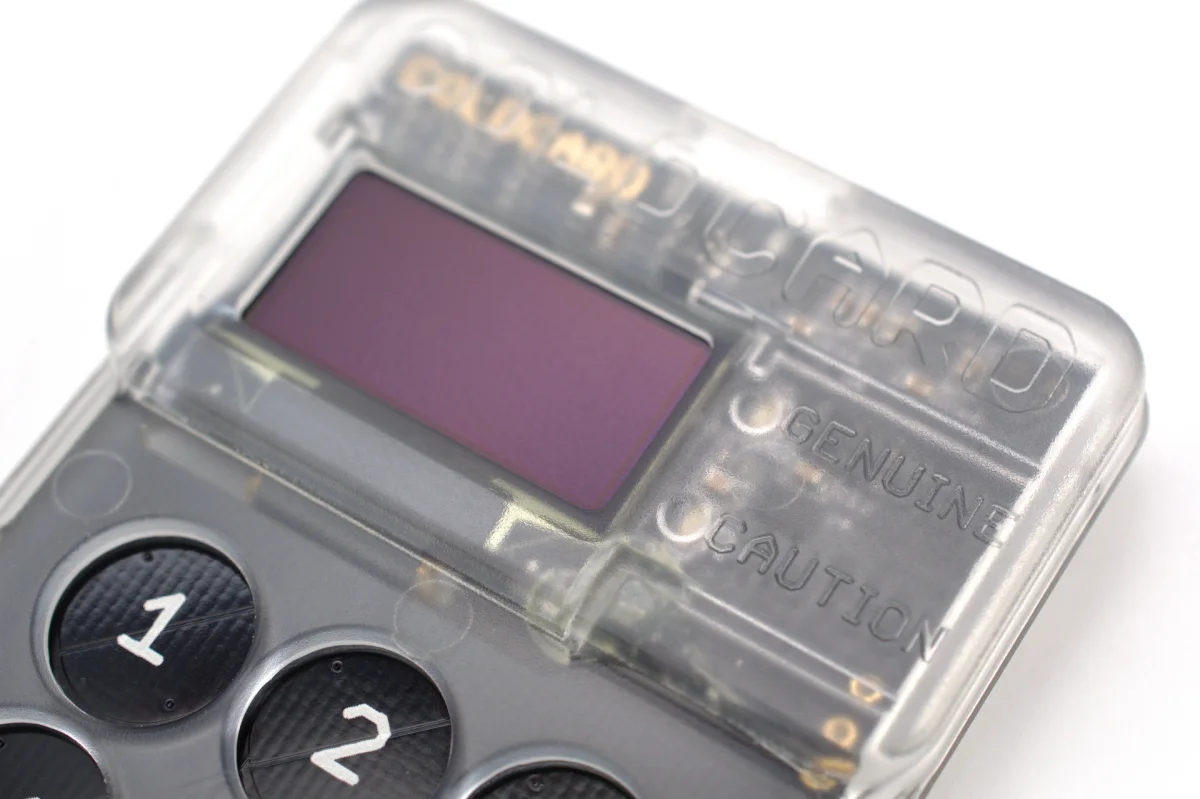
Coinkite, the maker of the Coldcard bitcoin hardware wallet, has published a full postmortem on the seed-generation flaw behind this summer’s thefts. The company admits the flaw got past at least 15 independent reviews. The report snapshot is dated November 23, 2026, and the company announced it on its blog on November 24. It says that from March 29, 2021, through July 30, 2026, Coldcard firmware built wallet seeds with MicroPython’s Yasmarang software pseudo-random number generator instead of the device’s STM32 hardware random-number generator. Attackers began rebuilding the affected keys offline on July 29. As of November 18, Coinkite had about 300 loss-related support tickets tied to 242 accounts.
What went wrong
According to the postmortem report, the defect dates to March 2021, when Coinkite integrated the libNgU library and changed the randomness interface used for seed generation. The setting meant to disable the software fallback did not take effect because of a configuration and linkage error.
Coinkite estimates that affected seeds had roughly 40 bits of effective entropy on the Mk2 and Mk3 instead of the intended 128-bit security target. Mk4, Mk5 and Q seeds had about 72 bits, because those devices also mixed in data from their secure elements. The company says devices were not accessed remotely or taken over. In the words of its blog post: “Every theft was carried out offline by regenerating affected private keys.”
Coinkite identified the defect on July 30 and published fixed firmware for all five release tracks on July 31.
Why 15 reviews missed it
This is the most uncomfortable part of the report for the hardware-wallet industry. Coinkite lists at least 15 independent review and security-research efforts between 2021 and 2026. They include paid pre-release reviews, Ledger Donjon physical-security work and an AI security review in May–June 2026. “COLDCARD was among the most-scrutinized firmware in Bitcoin,” the blog post says. “None identified the defect.”
The report’s stated root cause is a gap in verification. Nobody checked which random-number implementation the shipping seed-generation path actually reached. Reviewers confirmed that the hardware RNG code existed, but nobody traced whether wallet creation called it. Coinkite also says many of the efforts were not full firmware audits. Cointelegraph notes the weak phrases looked normal to users.
How big are the losses
The report counts about 300 loss-related tickets associated with 242 requester accounts as of November 18. Coinkite’s blog post separately cites 236 matched customer accounts, or about 0.2% of the estimated user base. The report says the real number is likely higher, since not every victim files a ticket.
The best on-chain estimate is still Galaxy Research’s from August. In an August 14 report, Galaxy attributed 1,778.84 BTC stolen from more than 8,600 addresses with high confidence. Cointelegraph later reported an updated figure of 1,789 BTC, worth about $114.7 million at the time of the thefts, with roughly 87% of it unmoved as of late August. The postmortem says law enforcement is investigating and that the Canadian Centre for Cyber Security has a separate open case.
Compensation is still undecided. The report lists publishing a compensation or assistance plan as an open item with “no decision.” On its blog, Coinkite says it is “still evaluating every option to help affected customers.”
What Coldcard owners should do
The key point in the report is that patching a device does not fix an old seed. “A firmware update does not repair a seed generated on affected firmware,” Coinkite writes. Seeds were affected if they were generated on Mk2/Mk3 firmware 4.0.1 through 4.1.9, Mk4/Mk5 standard firmware before 5.6.0 (Edge before 6.6.0X), or Q firmware before 1.5.0Q (Edge before 6.6.0QX). Owners of those seeds should create a new seed on fixed firmware and move their funds. Coinkite says seeds generated with more than 50 fair, private dice rolls were not weakened.
Coinkite also warns about follow-on scams. It tells owners to use only support routes linked from coldcard.com and to treat unsolicited recovery or compensation offers as likely impersonation. Never share seed words, passphrases or dice rolls with anyone. Our explainer on bitcoin self-custody covers how to migrate safely to a new seed, and our guide to fees, withdrawals and security explains the trade-offs between self-custody and keeping coins on an exchange.
FAQ
Which Coldcard devices were affected?
Seeds were affected if they were generated on Mk2/Mk3 firmware 4.0.1 through 4.1.9, Mk4/Mk5 before 5.6.0 (Edge before 6.6.0X), or Q before 1.5.0Q (Edge before 6.6.0QX), according to Coinkite’s postmortem.
Does updating the firmware fix an affected wallet?
No. Coinkite says a firmware update does not repair a seed generated on affected firmware. Owners must create a new seed and move funds.
Will victims be compensated?
Not yet. The postmortem lists a compensation plan as an open item with no decision.
Sources:
- Coinkite — “COLDCARD Seed-Generation Incident Postmortem” (PDF report) — November 23, 2026
- Coinkite blog — “Our COLDCARD seed-generation postmortem is now public” — November 24, 2026
- Cointelegraph — report on how security reviews missed the Coldcard wallet flaw — November 24, 2026
- CryptoBriefing — “Coinkite reports ~242 customers affected by Coldcard vulnerability” — November 24, 2026
- Galaxy Research — “Coldcard exploit abates as total losses climb to at least 1,700 BTC” — August 14, 2026
The bottom line
Coinkite’s postmortem confirms that Coldcard seeds were generated with a software random-number generator for more than five years and that at least 15 reviews missed it. Thefts began on July 29, 2026, and as of November 18, 242 accounts had reported losses. Galaxy puts the stolen total at roughly 1,780–1,790 BTC. Fixed firmware has been available since July 31, but only a new seed protects funds, and Coinkite has not yet decided on compensation.
News summary based on Coinkite’s report and the reporting cited above, current as of November 25, 2026. Loss figures are estimates from the cited sources. For general information only; not financial or legal advice.
Photo: Gareth Halfacree from Bradford, UK / Wikimedia Commons, CC BY-SA 2.0 (https://commons.wikimedia.org/wiki/File:Coinkite_Coldcard_Hardware_Wallet_(43153911800).png)

Our platforms
The latest crypto platforms reviewed by our team.

Scellérance Review 2026: Legit or Scam? Test + Clones
Scellérance in our 2026 test: UK Ltd (CRN 15427916) under a Swiss parent (CHE-012.309.567, 2023), a £575 withdrawal in 1 h 10, three clone domains days old.

Opulendra Review 2026: Legit or Scam? Test + Clone Check
Opulendra in our 2026 test: Ontario corp 17588787, three-source AI signals, a CA$640 withdrawal in 45 minutes and why opulendra.org is not the official site.

Daybreak Trustmere Review 2026: Legit or Scam? FCA + Test
Daybreak Trustmere in our 2026 test: a UK Ltd with CRN 15858566, multi-channel signals, a £465 withdrawal test in 42 minutes and no FCA warning-list entry.

SterlingVault AI Review 2026: Scam or Legit? Registry Check
SterlingVault AI review 2026: scores 3.6/5 — FCA Register FRN 987654 verified, withdrawal test passed in 2h 35m — for UK beginners accepting market risk.

LamboledgerATOM Review 2026: Legit or Scam? Our UK Hands-On Test
LamboledgerATOM review 2026: Companies House and FCA Register checks (FRN 984613), US$250 minimum, Faster Payments withdrawals, pros, cons and who it suits.

MetreturnETH Review 2026: Scam or Legit? Canada Hands-On Look
MetreturnETH review 2026: Ontario registration, CIRO-member partner broker, US$250 minimum deposit, Interac withdrawals in minutes–2 hours, and who it suits.

NorthShield Advisory Review: Trustworthy or Not? Canada Test 2026
NorthShield Advisory review 2026: Ontario corporation check, CIRO-member partner broker, US$250 minimum, Interac payouts in minutes–2 hours, pros and cons.

Nuvaultance Review Canada: Legit Platform or Scam? Our Test
Nuvaultance review 2026: Ontario registry check, CIRO-member partner broker with CIPF cover, US$250 minimum, Interac withdrawals in minutes–2 hours, pros and cons.

VestAccrue Review 2026: Legit or Scam? A Canada Hands-On Analysis
VestAccrue review 2026: Ontario registration, CIRO-member partner broker, US$250 minimum (about CA$340), Interac withdrawals in minutes–2 hours, who it suits.