DOJ files to forfeit over $1.1 billion in USDC stolen in the Binance hack, blaming North Korea
On November 23, 2026, the US Justice Department filed a civil forfeiture complaint in Washington, D.C. targeting more than $1.1 billion in USDC from the October 29 Binance hack, held at 36 addresses on 18 blockchains. Circle has agreed to reissue the frozen amount to the US if a court orders forfeiture.
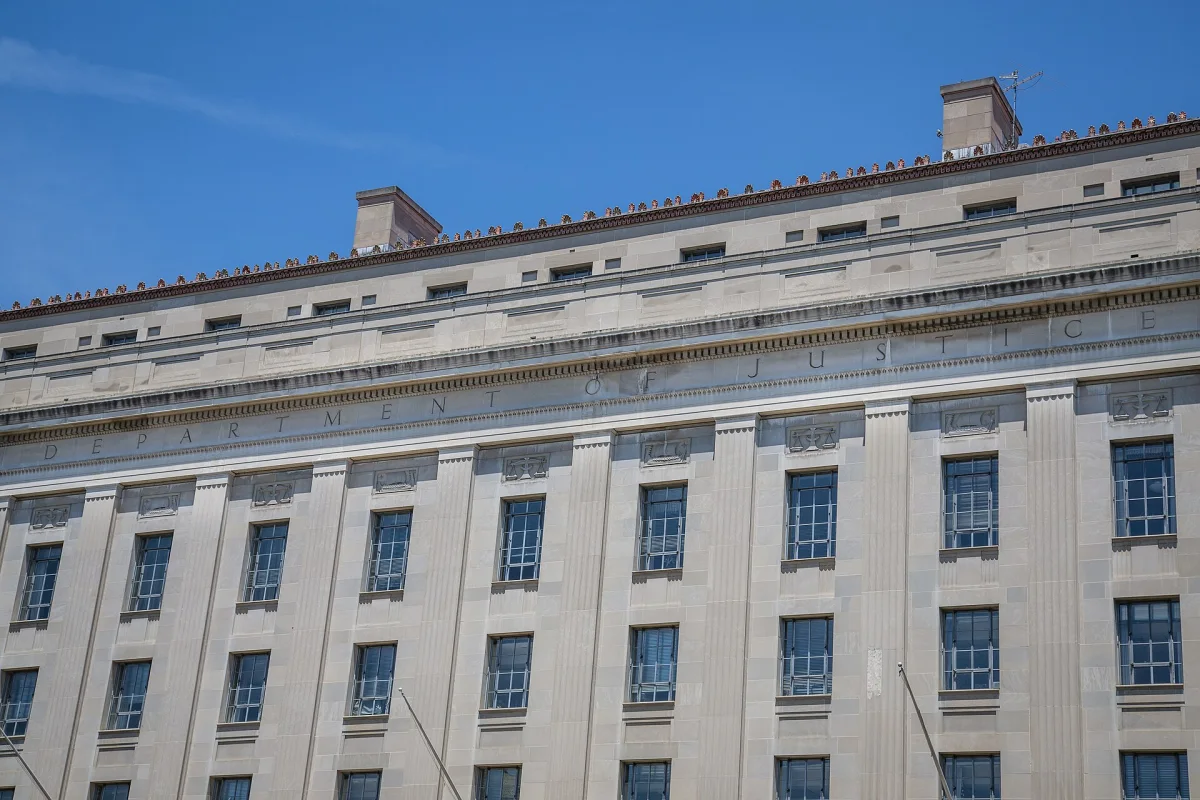
The US Justice Department has gone to court to take permanent ownership of more than $1.1 billion in USDC stolen in last month’s hack of Binance. In a civil forfeiture complaint filed on Monday, November 23, 2026, in the US District Court for the District of Columbia, prosecutors say the stablecoins are proceeds of the October 29 theft, which US agencies attribute to North Korean military hackers. If the court grants forfeiture, USDC issuer Circle has agreed to mint an equivalent amount of new USDC and hand it to the United States.
What the Justice Department filed
The case is captioned United States v. All USDC Associated With 36 Virtual Currency Addresses on 18 Different Blockchains (Civ. No. 26-4150). It is an action “in rem,” meaning the government is suing the assets themselves rather than any person. The Justice Department’s announcement says the United States “filed a civil claim to forfeit over $1.1 billion of USDC” that is “proceeds and laundered funds from the cryptocurrency theft from Binance.”
According to the complaint, filed by the D.C. US Attorney’s Office with two Justice Department cyber units, the Secret Service, FBI and IRS Criminal Investigation assess that the theft was carried out by North Korean military groups known as the Lazarus Group and APT38, based on technical indicators and the way the funds were laundered. These are allegations; North Korea has denied involvement, and no court has ruled on them.
The Justice Department put the total stolen from Binance at more than $6 billion; Binance has estimated its losses at about $6.34 billion. The department said more than $2.9 billion in crypto from multiple sources has been frozen, seized or returned since the theft.
Assistant Attorney General A. Tysen Duva of the Criminal Division said: “Today’s action underscores the critical role of public-private partnerships in combatting cryptocurrency-enabled crime.” FBI Cyber Branch Operations Director Brett Leatherman said: “Following the Binance theft, the FBI and our partners moved quickly to trace and freeze stolen assets.”
How Circle’s freeze turns into recovered money
The 36 addresses are still controlled by the hackers, but Circle has blocklisted them, so the USDC inside cannot be sent anywhere. According to the complaint, Circle told the government it does not have the technical ability to move the frozen tokens to the United States. Instead, it “has agreed to voluntarily issue new USDC in an amount equivalent to the amount of the Defendant Property” and transfer that substitute USDC to the government once it receives a forfeiture order.
The legal timeline, as set out in the government’s motion filed the same day:
- Circle first restricted access to the funds voluntarily and, on November 6, said it would keep them blocked until the forfeiture case ends or a court orders otherwise.
- A pre-complaint temporary restraining order was issued on November 12 “for a period of 14 days, until November 23, 2026.”
- On November 23, prosecutors filed the complaint and an emergency motion for a new restraining order so there is no gap in the freeze.
The motion states that Binance and Circle both consented to the original order and the extension, and that the government is “unaware of any claimants” to the funds. The motion itself values the property at “approximately $1 billion.”
What happens next
A forfeiture order has not been issued yet. Under the standard procedure for in rem cases, anyone claiming an interest in the USDC can come forward and contest the action; only after that process can the court enter a final order.
Two other recovery tracks are running in parallel. Binance obtained a $6.5 billion worldwide freezing order from the Abu Dhabi Global Market Courts on November 18. Meanwhile, Elliptic tracked about $860 million in stolen ether moving in four days last week.
What it means for Binance users
Customers were not directly exposed to this forfeiture: the government’s motion notes that Binance has said publicly it is self-insuring all losses, and the exchange has already replenished most affected balances. For background on the exchange, see our Binance review.
The case also shows why issuer-controlled stablecoins were the easiest part of the loot for authorities to stop, while native ETH and BTC are still being laundered.
FAQ
How much is the Justice Department trying to forfeit?
More than $1.1 billion in USDC, according to the Justice Department, held at 36 addresses across 18 blockchains.
Who does the US say carried out the Binance hack?
The complaint says the Secret Service, FBI and IRS Criminal Investigation assess that North Korean military hacking groups known as the Lazarus Group and APT38 were responsible. North Korea has denied it.
How will the government actually get the frozen USDC?
Circle cannot move the blocklisted tokens, so it has agreed to issue an equal amount of new USDC and transfer it to the United States once the court enters a forfeiture order.
The bottom line
The Justice Department filed on November 23 to forfeit more than $1.1 billion in frozen USDC from the October 29 Binance hack, with Circle committed to reissuing the amount to the government if a court approves. No forfeiture order has been entered yet.
Sources:
- US Department of Justice — “United States Files Action to Recover More Than $1 Billion in Cryptocurrency Assets Stolen by North Korean Cyber Actors in Binance Hack” — November 23, 2026
- US District Court for the District of Columbia, Civ. No. 26-4150 — Verified Complaint for Forfeiture in Rem and Motion for a Restraining Order — filed November 23, 2026
- US Department of Justice — “Justice Department Announces Actions to Disrupt North Korea’s Massive Theft of Cryptocurrency” — November 12, 2026
- crypto.news — “DOJ seeks about $1B in USDC tied to Binance hack” — November 23, 2026
- TFTC — “DOJ Moves to Seize $1.1B in USDC From North Korea’s $6.34B Binance Hack” — November 24, 2026
News summary based on court filings and reporting cited above, current as of November 24, 2026. Attribution and forfeiture claims are allegations by the US government and have not been decided by a court. For general information only; not financial or legal advice.
Photo: Tony Webster from Portland, Oregon, United States / Wikimedia Commons, CC BY 2.0 (https://commons.wikimedia.org/wiki/File:Department_of_Justice_Building_-_Washington,_DC_(14323816141).jpg)

Our platforms
The latest crypto platforms reviewed by our team.

Scellérance Review 2026: Legit or Scam? Test + Clones
Scellérance in our 2026 test: UK Ltd (CRN 15427916) under a Swiss parent (CHE-012.309.567, 2023), a £575 withdrawal in 1 h 10, three clone domains days old.

Opulendra Review 2026: Legit or Scam? Test + Clone Check
Opulendra in our 2026 test: Ontario corp 17588787, three-source AI signals, a CA$640 withdrawal in 45 minutes and why opulendra.org is not the official site.

Daybreak Trustmere Review 2026: Legit or Scam? FCA + Test
Daybreak Trustmere in our 2026 test: a UK Ltd with CRN 15858566, multi-channel signals, a £465 withdrawal test in 42 minutes and no FCA warning-list entry.

SterlingVault AI Review 2026: Scam or Legit? Registry Check
SterlingVault AI review 2026: scores 3.6/5 — FCA Register FRN 987654 verified, withdrawal test passed in 2h 35m — for UK beginners accepting market risk.

LamboledgerATOM Review 2026: Legit or Scam? Our UK Hands-On Test
LamboledgerATOM review 2026: Companies House and FCA Register checks (FRN 984613), US$250 minimum, Faster Payments withdrawals, pros, cons and who it suits.

MetreturnETH Review 2026: Scam or Legit? Canada Hands-On Look
MetreturnETH review 2026: Ontario registration, CIRO-member partner broker, US$250 minimum deposit, Interac withdrawals in minutes–2 hours, and who it suits.

NorthShield Advisory Review: Trustworthy or Not? Canada Test 2026
NorthShield Advisory review 2026: Ontario corporation check, CIRO-member partner broker, US$250 minimum, Interac payouts in minutes–2 hours, pros and cons.
Nuvaultance Review Canada: Legit Platform or Scam? Our Test
Nuvaultance review 2026: Ontario registry check, CIRO-member partner broker with CIPF cover, US$250 minimum, Interac withdrawals in minutes–2 hours, pros and cons.

VestAccrue Review 2026: Legit or Scam? A Canada Hands-On Analysis
VestAccrue review 2026: Ontario registration, CIRO-member partner broker, US$250 minimum (about CA$340), Interac withdrawals in minutes–2 hours, who it suits.