House committee sends the Strategic Bitcoin Reserve bill to the full House, with five weeks left in this Congress
The House Financial Services Committee formally reported H.R. 8957, the American Reserve Modernization Act, to the full House on November 24, 2026. The bill would write the bitcoin reserve into law with a 20-year holding lock, but it must clear both chambers before Congress ends on January 3.
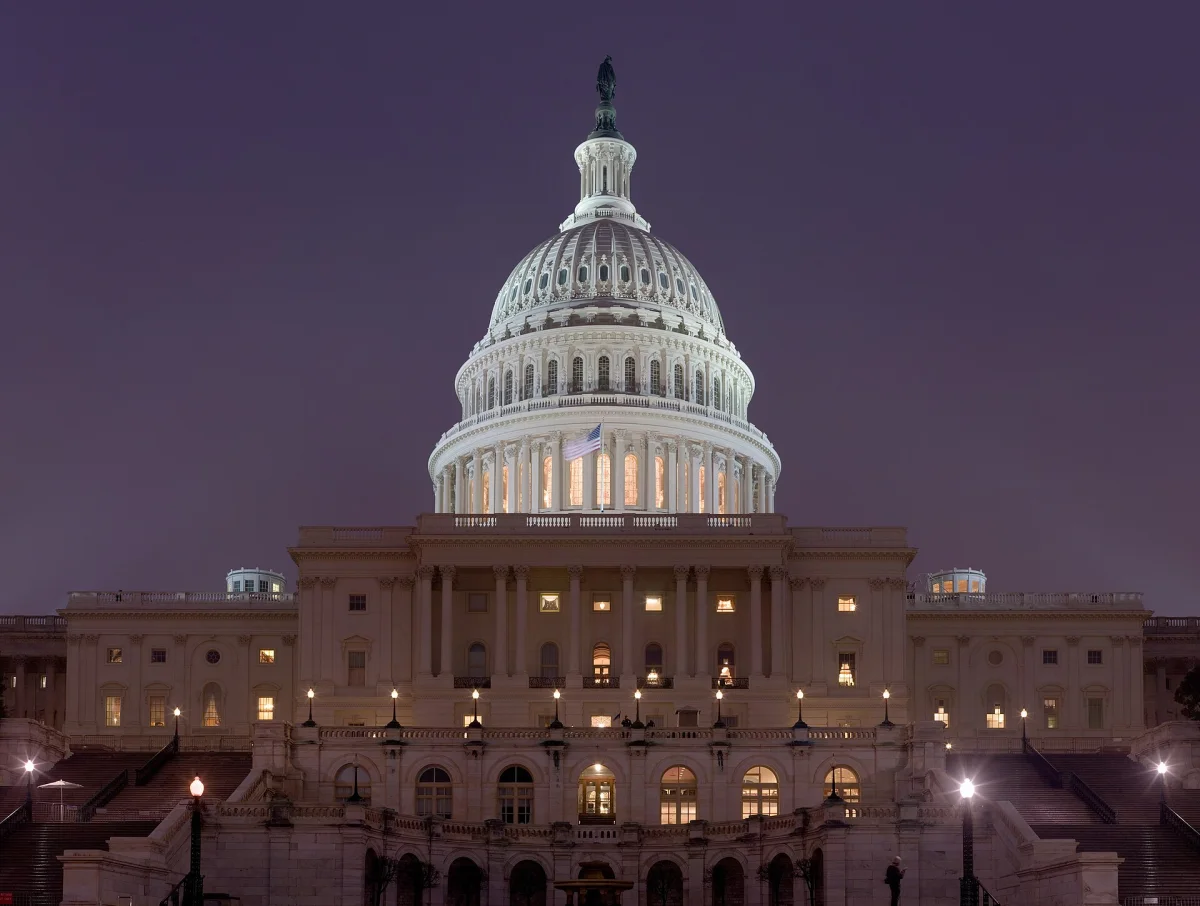
A bill that would put the US Strategic Bitcoin Reserve into federal law is now ready for a vote by the full House of Representatives. On November 24, 2026, the House Financial Services Committee formally reported H.R. 8957, the American Reserve Modernization Act of 2026, two months after approving it 28-21 on a party-line vote. The bill would require the government to hold its bitcoin for at least 20 years. The timing is the obstacle: the current Congress ends on January 3, so the bill has about five weeks to pass both chambers and be signed into law.
What happened this week
The committee vote itself took place on September 16. According to CoinDesk, all 28 yes votes came from Republicans and all 21 no votes from Democrats. The formal report on November 24 is the procedural step that sends the revised bill to the House floor. The Block reports that the bill is now on the Union Calendar as Calendar No. 789. That makes it eligible for a floor vote, but no date had been set as of November 26.
The bill was introduced on May 21 by Rep. Nick Begich (R-Alaska). According to his press release, Rep. Jared Golden (D-Maine) is the co-lead, and the bill was introduced with a list of original cosponsors.
What the bill would do
The reserve already exists on paper. President Trump’s executive order of March 6, 2025 established it, and The Block notes the reserve is funded mainly with bitcoin the government already owns from criminal and civil forfeitures. An executive order can be changed by the next administration. H.R. 8957 would put the policy into statute. Based on the bill sponsor’s release and both news reports, the main provisions are:
- Two pools. The Treasury would set up a Strategic Bitcoin Reserve and a separate Digital Asset Stockpile for other cryptocurrencies within 180 days of enactment.
- A 20-year lock. Bitcoin placed in the reserve could not be “sold, swapped, auctioned, encumbered, or otherwise disposed of for any purpose” for at least 20 years, CoinDesk reports.
- Accounting and audits. Federal agencies would have to report the digital assets they hold. The release also lists quarterly public proof-of-reserve reports, independent third-party audits and congressional oversight.
- No purchase mandate. Earlier proposals called for buying 1 million BTC. As The Block reported when the bill was introduced, this one drops that target. It instead orders a study of “budget-neutral” ways to acquire more bitcoin without raising taxes or adding to the deficit.
- Self-custody. The release says the bill affirms that the government may not impair individuals’ right to own, transfer or self-custody digital assets. For background on what that means in practice, see our explainer on bitcoin self-custody.
Golden explained why the bill matters in the sponsor’s release: “Congress has never set a federal policy on what to do with that asset.”
How much bitcoin is involved
CoinDesk, citing Arkham data, reports that addresses linked to the US government hold about 306,795 BTC, worth more than $18.7 billion at current prices. That figure comes from on-chain analytics, not an official Treasury count. Agency-by-agency reporting is one of the gaps the bill is meant to fill. The dollar value has also fallen with the market: bitcoin traded near $57,500 this week, its lowest level in more than two years, as we covered in our latest market report.
The deadline problem
Five weeks, much of it holidays, is a short window: the House and Senate would both have to pass the bill and the President sign it before January 3. Any bill that is not enacted by then dies with the 119th Congress and would have to be introduced again. CoinDesk also notes that Democrats are set to control both chambers from January, and every Democrat on the committee voted against this bill.
Prediction markets put the odds low. Both outlets cite Polymarket: The Block puts the chance of the US establishing a national bitcoin reserve by the end of 2026 at 4%, and CoinDesk says it is under 5%. For now, the executive order remains the only legal basis for the reserve. Our crypto regulation by country guide tracks how other governments handle crypto holdings and licensing.
FAQ
What is H.R. 8957?
It is the American Reserve Modernization Act of 2026, introduced by Rep. Nick Begich with Rep. Jared Golden as co-lead. It would put the Strategic Bitcoin Reserve into law, with a 20-year holding lock and proof-of-reserve reporting.
Does the bill require the US to buy bitcoin?
No. It drops the 1 million BTC purchase target from earlier proposals and orders a study of budget-neutral ways to acquire more bitcoin.
Can it become law this year?
Only if the House and Senate both pass it and the President signs it before the current Congress ends on January 3. Polymarket puts the odds of a national bitcoin reserve being established by year-end at around 4–5%.
The bottom line
H.R. 8957 has cleared the committee stage, and its formal report on November 24 makes it eligible for a House vote. The bill would turn the 2025 executive order into a statutory reserve with a 20-year lock on government bitcoin, audits and proof-of-reserve reporting, and it does not require any bitcoin purchases. Its obstacle is the calendar: no floor date, no Senate action yet, and Congress ends on January 3.
Sources:
- CoinDesk — “Bill to lock up U.S. government bitcoin for 20 years advances to full House” — November 25, 2026
- The Block — “House Committee advances Strategic Bitcoin Reserve bill with narrow path to passage” — November 25, 2026
- Office of Rep. Nick Begich — “Congressman Nick Begich Leads Legislation to Establish Strategic Bitcoin Reserve” — May 21, 2026
- The Block — “New strategic bitcoin reserve bill drops 1 million BTC purchase target, adds 20-year lockup period” — May 22, 2026
News summary based on the reporting and official release cited above, current as of November 26, 2026. Bill provisions may change before any floor vote; prediction-market odds are not forecasts by TycoonZone. For general information only; not financial or legal advice.
Photo: Diliff / Wikimedia Commons, Public domain (https://commons.wikimedia.org/wiki/File:US_Capitol_Building_at_night_Jan_2006.jpg)

Our platforms
The latest crypto platforms reviewed by our team.

Scellérance Review 2026: Legit or Scam? Test + Clones
Scellérance in our 2026 test: UK Ltd (CRN 15427916) under a Swiss parent (CHE-012.309.567, 2023), a £575 withdrawal in 1 h 10, three clone domains days old.

Opulendra Review 2026: Legit or Scam? Test + Clone Check
Opulendra in our 2026 test: Ontario corp 17588787, three-source AI signals, a CA$640 withdrawal in 45 minutes and why opulendra.org is not the official site.

Daybreak Trustmere Review 2026: Legit or Scam? FCA + Test
Daybreak Trustmere in our 2026 test: a UK Ltd with CRN 15858566, multi-channel signals, a £465 withdrawal test in 42 minutes and no FCA warning-list entry.

SterlingVault AI Review 2026: Scam or Legit? Registry Check
SterlingVault AI review 2026: scores 3.6/5 — FCA Register FRN 987654 verified, withdrawal test passed in 2h 35m — for UK beginners accepting market risk.

LamboledgerATOM Review 2026: Legit or Scam? Our UK Hands-On Test
LamboledgerATOM review 2026: Companies House and FCA Register checks (FRN 984613), US$250 minimum, Faster Payments withdrawals, pros, cons and who it suits.

MetreturnETH Review 2026: Scam or Legit? Canada Hands-On Look
MetreturnETH review 2026: Ontario registration, CIRO-member partner broker, US$250 minimum deposit, Interac withdrawals in minutes–2 hours, and who it suits.

NorthShield Advisory Review: Trustworthy or Not? Canada Test 2026
NorthShield Advisory review 2026: Ontario corporation check, CIRO-member partner broker, US$250 minimum, Interac payouts in minutes–2 hours, pros and cons.

Nuvaultance Review Canada: Legit Platform or Scam? Our Test
Nuvaultance review 2026: Ontario registry check, CIRO-member partner broker with CIPF cover, US$250 minimum, Interac withdrawals in minutes–2 hours, pros and cons.

VestAccrue Review 2026: Legit or Scam? A Canada Hands-On Analysis
VestAccrue review 2026: Ontario registration, CIRO-member partner broker, US$250 minimum (about CA$340), Interac withdrawals in minutes–2 hours, who it suits.