Optimizely breach planted a crypto address-swapper on 178 organizations' sites, including Ledger and HSBC
On November 16, 2026, attackers injected malicious JavaScript into Optimizely-hosted scripts used by 178 organizations, including Ledger, HSBC, the BBC and CNN. The code swapped crypto wallet addresses and carried a card skimmer; attacker wallets received about $7,000 before Optimizely removed it.

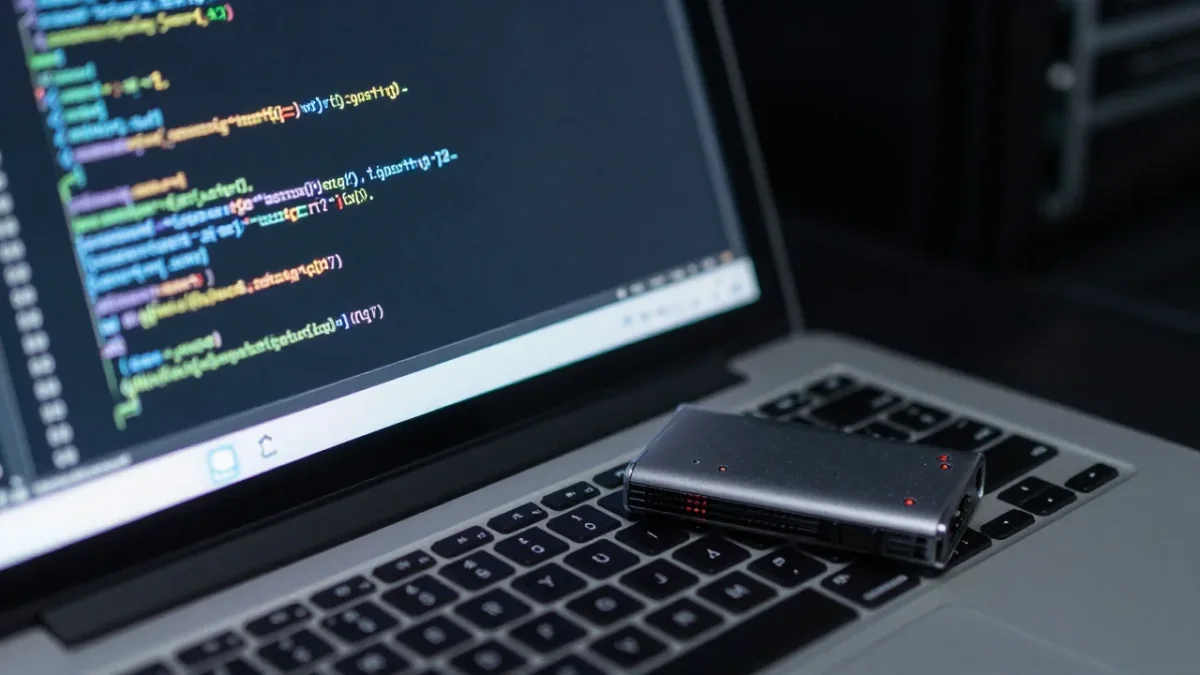
Attackers slipped crypto-stealing code into scripts that 178 organizations load from Optimizely, a widely used website testing and personalization service, on Monday, November 16, 2026. Affected sites included hardware wallet maker Ledger, HSBC, the BBC, CNN, Zoom and several brokers. The code replaced crypto wallet addresses that visitors copied or typed, and later versions also carried a card skimmer. According to the researchers who tracked the attack, the wallets it pointed to received roughly $7,000 before Optimizely removed the code. The sum is small, but one third-party script was enough to put a crypto clipper on the sites of major banks and a wallet maker.
What happened
The incident was first documented by Scott Helme of the security firm Report URI. His team checked 1,611 Optimizely snippets and found 188 infected snippets belonging to 178 organizations, adding that “the real number is likely higher.” The malicious code was written into each customer’s “Project JavaScript” field, so it was still served from Optimizely’s own CDN. Helme says this was not cache poisoning, and that it is not yet known how the attacker got write access to unrelated customer projects.
Optimizely told reporters that an unauthorized party exploited a vulnerability in its Experimentation account signup flow, as reported by CoinDesk and Decrypt. Report URI’s timeline, in UTC, runs as follows:
- 04:21: first injection appears in the BBC’s snippet.
- 08:10: first crypto “clipper” build.
- 13:03: attacker begins sweeping funds to exchanges.
- 13:43: a card skimmer is added.
- About 20:40 to 21:10: mass cleanup (Ledger’s snippet at 20:41, the BBC’s at 21:07).
- 23:11: all files Report URI could find are clean.
What the code did
The payload targeted crypto users first. Per StepSecurity, it swapped wallet addresses on the page and in the clipboard, but only when nearby text contained payment words such as “wallet,” “deposit” or “send.” Report URI lists eight networks targeted: Bitcoin, Ethereum and EVM chains, Tron, Solana, TON, Litecoin, Bitcoin Cash and Dogecoin.
The card skimmer read card numbers typed into sites’ own forms. StepSecurity notes that it could not read payment fields isolated in cross-origin iframes, such as hosted checkout fields from payment processors. Researcher Amirul Iman named the campaign “Optimjack,” per Cointelegraph.
Report URI counts 32 affected organizations in banking and finance and six in crypto and trading: Ledger, IG, OANDA’s Coinpass, Interactive Investor, TMS Brokers and Betashares.
How much was stolen
The dollar figures are small and differ by snapshot time. Report URI put receipts at about $7,040 as of 19:25 UTC on November 16; its update the next day lists about $7,150, and the attacker emptied the wallets early on November 17. Galaxy’s Alex Thorn estimated that victims “have only sent around $2,300 in total,” arguing that much of the Bitcoin received looked like the attacker’s own funds routed through an exchange, according to Cointelegraph.
Card data is the bigger unknown. Helme told Cointelegraph there was “no evidence that payment cards were actually captured,” and Report URI says it cannot see how many cards were taken.
What the companies say
Optimizely said in a statement quoted by Cointelegraph: “We have blocked access to the vulnerable path and deployed a fix,” and “We have removed the injected code from affected projects.” It added that it had “ended active sessions, revoked tokens, and reset access for affected user accounts.”
OANDA, speaking for Coinpass and TMS Brokers, said “our internal systems and infrastructure were not breached” and that it had “seen no indication of any impact on client funds or account data.” As of publication, we found no public statement from Ledger in the coverage reviewed; CoinDesk said Ledger and HSBC did not immediately respond.
What it means for crypto users
Nothing reported so far suggests that Ledger devices or exchange custody systems were compromised. The risk was on the web page, where an address shown or copied in a browser could be replaced. Verify the full receiving address on a trusted screen, ideally a hardware wallet’s display, before you confirm a transfer, and treat an address that changes after you paste it as a red flag. Our guides on checking platforms for scams and on fees, withdrawals and security cover the basics, and our recent coverage of the Lighter API-key exploit shows another way third-party access can drain funds.
FAQ
Which websites were affected by the Optimizely attack?
Report URI found 188 infected snippets across 178 organizations, including Ledger, HSBC, the BBC, CNN, Zoom, Salesforce, IG, Coinpass and Interactive Investor. It says the real number is likely higher.
How much crypto did the attackers get?
Attacker wallets received roughly $7,040 to $7,150, depending on the snapshot. Galaxy’s Alex Thorn estimated that victims themselves sent only about $2,300.
Is the malicious code still live?
According to Report URI, all the files it could find were clean by 23:11 UTC on November 16. Optimizely says it blocked the vulnerable path and removed the injected code.
The bottom line
A flaw at one web-tooling vendor let an attacker run a crypto address-swapper and card skimmer on 178 organizations’ sites for most of a day. The confirmed crypto losses are in the low thousands of dollars, and there is no evidence yet that cards were captured. The open questions are how the signup flaw gave access to existing customer projects and whether more sites were hit than researchers could see.
Sources:
- Report URI — “World’s largest brands infected with malware via Optimizely” — Nov 16, 2026 (updated Nov 17)
- StepSecurity — Optimjack: Optimizely-hosted scripts with crypto clipper and card skimmer — Nov 17, 2026
- CoinDesk — Hackers planted crypto-stealing code on 178 organizations’ sites, including HSBC, BBC and Ledger — Nov 17, 2026
- Cointelegraph — report on malware injected into 178 major websites via Optimizely, with Optimizely and OANDA statements — Nov 17, 2026
- Decrypt — Optimizely hack hijacked Ledger, BBC and 176 other sites to swap crypto wallet addresses — Nov 17, 2026
News summary based on reporting cited above, current as of November 18, 2026. Figures reflect the cited sources and may change as investigations continue. For general information only; not financial or legal advice.
Our platforms
The latest crypto platforms reviewed by our team.

Scellérance Review 2026: Legit or Scam? Test + Clones
Scellérance in our 2026 test: UK Ltd (CRN 15427916) under a Swiss parent (CHE-012.309.567, 2023), a £575 withdrawal in 1 h 10, three clone domains days old.

Opulendra Review 2026: Legit or Scam? Test + Clone Check
Opulendra in our 2026 test: Ontario corp 17588787, three-source AI signals, a CA$640 withdrawal in 45 minutes and why opulendra.org is not the official site.

Daybreak Trustmere Review 2026: Legit or Scam? FCA + Test
Daybreak Trustmere in our 2026 test: a UK Ltd with CRN 15858566, multi-channel signals, a £465 withdrawal test in 42 minutes and no FCA warning-list entry.

SterlingVault AI Review 2026: Scam or Legit? Registry Check
SterlingVault AI review 2026: scores 3.6/5 — FCA Register FRN 987654 verified, withdrawal test passed in 2h 35m — for UK beginners accepting market risk.

LamboledgerATOM Review 2026: Legit or Scam? Our UK Hands-On Test
LamboledgerATOM review 2026: Companies House and FCA Register checks (FRN 984613), US$250 minimum, Faster Payments withdrawals, pros, cons and who it suits.

MetreturnETH Review 2026: Scam or Legit? Canada Hands-On Look
MetreturnETH review 2026: Ontario registration, CIRO-member partner broker, US$250 minimum deposit, Interac withdrawals in minutes–2 hours, and who it suits.

NorthShield Advisory Review: Trustworthy or Not? Canada Test 2026
NorthShield Advisory review 2026: Ontario corporation check, CIRO-member partner broker, US$250 minimum, Interac payouts in minutes–2 hours, pros and cons.

Nuvaultance Review Canada: Legit Platform or Scam? Our Test
Nuvaultance review 2026: Ontario registry check, CIRO-member partner broker with CIPF cover, US$250 minimum, Interac withdrawals in minutes–2 hours, pros and cons.

VestAccrue Review 2026: Legit or Scam? A Canada Hands-On Analysis
VestAccrue review 2026: Ontario registration, CIRO-member partner broker, US$250 minimum (about CA$340), Interac withdrawals in minutes–2 hours, who it suits.