Braiins warns hijackers diverted up to 1.9 EH/s from bitcoin miners by exploiting unencrypted Stratum V1
Mining pool Braiins said on November 25 that attackers used forged internet routes and a fake pool server to divert miners' hashrate, peaking at up to 1.9 EH/s across 1,050–1,600 sites on November 20. Pools and miners were not breached; plain Stratum V1 connections were the weak point.

Attackers have been quietly stealing computing power from bitcoin miners by impersonating their mining pools. In a security alert published on November 25, 2026, the mining pool operator Braiins said the attacks exploited plain, unencrypted Stratum V1 connections between miners and pools and peaked on November 20, when single episodes diverted between 0.6 and 1.9 EH/s from 1,050 to 1,600 mining sites, mostly in Europe. Braiins says neither its pool nor miners’ hardware was breached, and it describes the attacks as still ongoing.
What happened
According to the Braiins alert, the campaign came in two waves. Between November 7 and 12, there were 19 episodes, mainly against operations in Brazil and Argentina, each hitting 120 to 400 sites and diverting 36 to 174 PH/s. On November 20 the attacker returned with four larger episodes lasting 6 to 49 minutes each, this time mostly in Europe.
“The episodes so far were short, but they grew from under 175 PH/s to 1.9 EH/s in two weeks,” Braiins wrote. “We interpret this as testing the waters.” The Block and Bitcoin.com News reported the same figures and timeline.
None of the three sources gives an estimate of the mining rewards lost in these attacks.
How the hijack worked
The attack did not touch DNS, pool accounts or mining firmware. Instead, Braiins says, the attacker manipulated internet routing. On November 20, a forged Border Gateway Protocol (BGP) route for a small block of 256 addresses was announced inside the pool provider’s larger address range, pulling miner traffic toward the attacker. The attacker then reset miners’ existing connections, so they reconnected to what looked like the same pool address.
A fake server answered the Stratum handshake, accepted any username and password, and fed miners real work from a different large public pool while stepping up share difficulty. Braiins says the diverted shares were submitted under the attacker’s own worker account at that other pool, which it says was not part of the attack. Miners kept hashing as normal and saw nothing obviously wrong, but the work they did during each episode was not credited to their own accounts.
This works because Stratum V1, the protocol introduced in 2012 that still carries most of the world’s hashrate, has no server authentication: a miner cannot tell a real pool from an impostor. “The weakness they used is not newly discovered,” Braiins said, noting that a 2014 attack documented by Dell SecureWorks used the same weakness to steal about $83,000 in mining rewards.
Braiins says affected miners ran at least 12 different firmware types across hundreds of networks, and that forged route announcements also covered address blocks holding Stratum endpoints of other large pools, so the risk is not limited to Braiins customers. Networks that validate route origins with RPKI rejected the forged route.
What Braiins tells miners to do
The pool’s recommendations, also summarized by Bitcoin.com News:
- Move to Stratum V2, which authenticates the pool with a public key embedded in the connection URL.
- As a stop-gap, run Stratum V1 over TLS, but only if the firmware actually validates certificates. Braiins says that in tests on November 20 and 23, two widely used firmwares still accepted invalid certificates. Its own Braiins OS 26.11 adds certificate and hostname checks.
- Remove every plain
stratum+tcp://entry from miner configs, including backup pools, so devices cannot fall back to an unencrypted connection. - Watch for anomalies: Braiins says its pool never sets share difficulty above 16,777,216, so a much higher value is a red flag. Bitcoin.com adds that Braiins urged comparing locally reported hashrate against what the pool credits.
- Network operators should switch on RPKI route-origin validation, which Braiins says “would have prevented the attacks on your network.”
Why it matters
Miners are already under pressure. Bitcoin has fallen sharply this month (see our report on bitcoin’s slide to $57,500) while network difficulty sits near record levels, so even short episodes of lost hashrate hit thin margins. The larger point is that the fix has existed for years but adoption has lagged: Braiins says that on November 23, most of the largest pools’ public endpoints still offered only plain-text Stratum V1.
It is the second infrastructure-security story this week where a long-known weakness surfaced only after losses, after Coinkite’s Coldcard postmortem on a seed-generation flaw.
FAQ
Was Braiins Pool hacked?
No. Braiins says the attack did not breach its pool, Braiins OS, miners’ hardware, DNS, or pool accounts, balances and payout settings. The weak point was the unencrypted connection between miners and pools.
How much hashrate was diverted?
Braiins says episodes on November 7–12 diverted 36 to 174 PH/s each, and four episodes on November 20 diverted 0.6 to 1.9 EH/s each across 1,050 to 1,600 sites.
How can miners protect themselves?
Braiins recommends Stratum V2, or Stratum V1 over TLS with firmware that properly validates certificates, and removing all plain stratum+tcp:// entries, including backups.
Sources:
- Braiins — “SECURITY ALERT: Bitcoin Hashrate Hijacking Detected on Stratum V1” — November 25, 2026
- The Block — “Bitcoin miners hit by hashrate hijacking attack exploiting unencrypted connections” — November 25, 2026
- Bitcoin.com News — “Braiins Warns of Widespread Bitcoin Hashrate Hijacking Attacks” — November 25, 2026
The bottom line
An attacker has been hijacking bitcoin miners’ hashrate by forging internet routes and impersonating pools over unencrypted Stratum V1, scaling from under 175 PH/s to as much as 1.9 EH/s in two weeks. No pool was breached and no loss estimate has been published, but Braiins says the attacks are ongoing and can affect miners on any pool. Encrypted connections, Stratum V2 and RPKI route validation close the gap.
News summary based on the Braiins alert and reporting cited above, current as of November 26, 2026. Figures are those reported by Braiins and have not been independently verified. For general information only; not financial or legal advice.
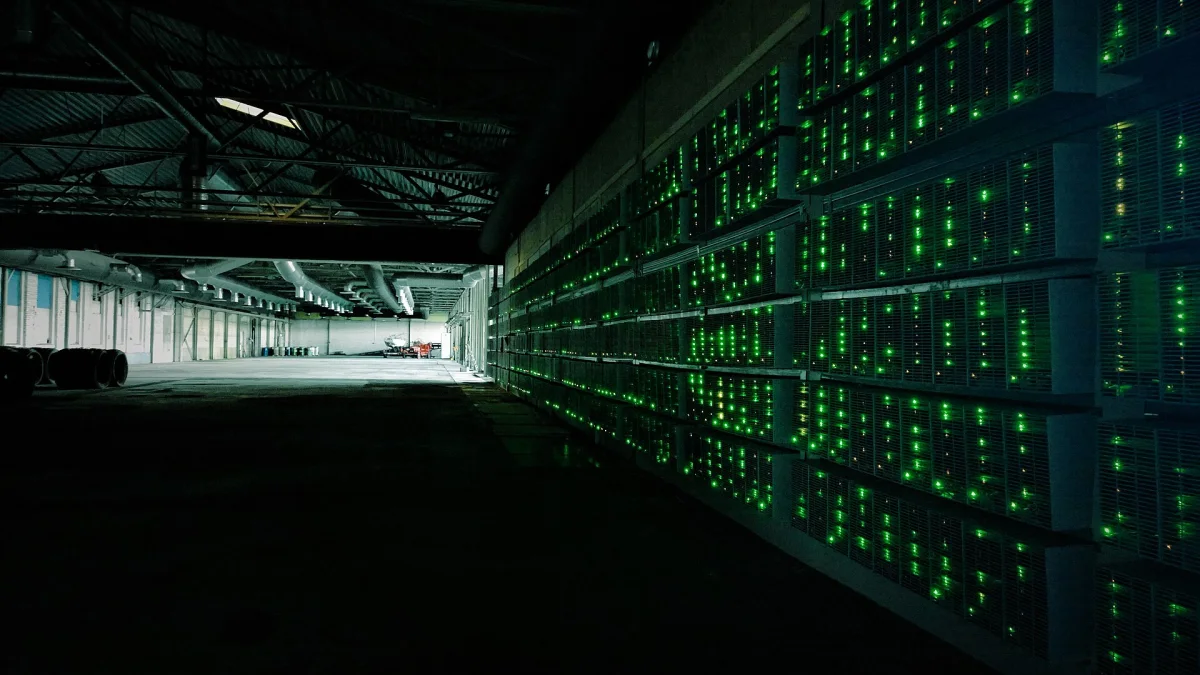
Photo: Marko Ahtisaari / Wikimedia Commons, CC BY 2.0 (https://commons.wikimedia.org/wiki/File:Bitcoin_mining_farm.jpg)

Our platforms
The latest crypto platforms reviewed by our team.

Scellérance Review 2026: Legit or Scam? Test + Clones
Scellérance in our 2026 test: UK Ltd (CRN 15427916) under a Swiss parent (CHE-012.309.567, 2023), a £575 withdrawal in 1 h 10, three clone domains days old.

Opulendra Review 2026: Legit or Scam? Test + Clone Check
Opulendra in our 2026 test: Ontario corp 17588787, three-source AI signals, a CA$640 withdrawal in 45 minutes and why opulendra.org is not the official site.

Daybreak Trustmere Review 2026: Legit or Scam? FCA + Test
Daybreak Trustmere in our 2026 test: a UK Ltd with CRN 15858566, multi-channel signals, a £465 withdrawal test in 42 minutes and no FCA warning-list entry.

SterlingVault AI Review 2026: Scam or Legit? Registry Check
SterlingVault AI review 2026: scores 3.6/5 — FCA Register FRN 987654 verified, withdrawal test passed in 2h 35m — for UK beginners accepting market risk.

LamboledgerATOM Review 2026: Legit or Scam? Our UK Hands-On Test
LamboledgerATOM review 2026: Companies House and FCA Register checks (FRN 984613), US$250 minimum, Faster Payments withdrawals, pros, cons and who it suits.

MetreturnETH Review 2026: Scam or Legit? Canada Hands-On Look
MetreturnETH review 2026: Ontario registration, CIRO-member partner broker, US$250 minimum deposit, Interac withdrawals in minutes–2 hours, and who it suits.

NorthShield Advisory Review: Trustworthy or Not? Canada Test 2026
NorthShield Advisory review 2026: Ontario corporation check, CIRO-member partner broker, US$250 minimum, Interac payouts in minutes–2 hours, pros and cons.

Nuvaultance Review Canada: Legit Platform or Scam? Our Test
Nuvaultance review 2026: Ontario registry check, CIRO-member partner broker with CIPF cover, US$250 minimum, Interac withdrawals in minutes–2 hours, pros and cons.

VestAccrue Review 2026: Legit or Scam? A Canada Hands-On Analysis
VestAccrue review 2026: Ontario registration, CIRO-member partner broker, US$250 minimum (about CA$340), Interac withdrawals in minutes–2 hours, who it suits.