CFTC staff let US derivatives exchanges count bitcoin, ether and stablecoins toward reserves after haircuts
In Staff Letter 26-31, issued November 23, 2026, two CFTC divisions said SEFs, DCMs and DCOs may count bitcoin, ether and payment stablecoins toward their one-year operating-cost reserves, with minimum haircuts of 20% and 2%, but not toward the cash and liquid-securities portion.
US derivatives venues can now treat bitcoin, ether and payment stablecoins as part of the money they must set aside to stay in business. In CFTC Staff Letter No. 26-31, dated November 23, 2026, the Commodity Futures Trading Commission’s Division of Market Oversight and Division of Clearing and Risk said swap execution facilities (SEFs), designated contract markets (DCMs) and derivatives clearing organizations (DCOs) may count those assets toward their one-year operating-cost requirement, subject to haircuts. The crypto cannot be used for the cash and liquid-securities part of that buffer.
What the advisory allows
Every registered US derivatives exchange and clearinghouse must hold financial resources covering at least twelve months of operating costs, under Commission Regulations 37.1301 (SEFs), 38.1101(a) (DCMs) and 39.11(a)(2) (DCOs). According to the CFTC press release, several registered entities and applicants already hold crypto in their businesses and asked whether those holdings could count.
Staff said yes for bitcoin, ether and payment stablecoins. The letter defines a payment stablecoin in two stages. Before the GENIUS Act takes effect, it means a dollar stablecoin issued by a state-regulated money transmitter or trust company, or a national trust bank, backed only by cash, Treasuries or overnight Treasury repos, with monthly reserve attestations. After that date, it means a stablecoin issued by a permitted or compliant foreign issuer under the GENIUS Act. Venues that want to use any other token must talk to staff first.
The haircuts
Staff said it would not object to the haircuts already accepted for futures commission merchants’ proprietary crypto positions. Those are a minimum 20% haircut for bitcoin and ether and 2% for payment stablecoins. A token that is not readily marketable and is not a payment stablecoin generally takes a 100% haircut, so it counts for nothing. In practice, as crypto.news illustrates, $1 million of bitcoin would count as at most $800,000 and $1 million of qualifying stablecoins as $980,000.
The letter also tells venues to weigh “wrong-way risk”, meaning the chance that operating losses and falling crypto prices hit at the same time. Securities.io flags the same point.
What crypto still cannot cover
Part of each reserve must be held in “unencumbered, liquid financial assets (i.e., cash and/or highly liquid securities).” Staff concluded that crypto assets, including payment stablecoins, are neither cash under GAAP nor highly liquid securities, so they cannot fill that slice. For a SEF, that means at least the greater of three months of operating costs or projected wind-down costs. DCMs and DCOs must keep at least six months.
The advisory also does not address whether crypto can count toward a DCO’s separate default-resources requirement, the money that backs clearing-member defaults. Both the letter and Securities.io note that gap.
Legal weight and context
The press release says the advisory reflects staff views only. It creates no new rules or enforceable rights, is not a no-action position and does not necessarily reflect the Commission’s views. CoinDesk likewise noted it was not a formal Commission action and could be changed by future leadership.
The letter cites a run of earlier staff steps. They include Letter 25-40 on digital assets as margin collateral (December 8, 2025, reissued as 26-05), Letter 25-39 on tokenized collateral, and crypto FAQs first published in March 2026 and expanded on September 24, 2026. It fits the commission’s broader push to bring crypto trading onshore, from Backpack’s approval for a US perpetuals exchange to Chairman Selig’s position that onchain venues must register or partner. The stablecoin definition is tied to the Treasury’s GENIUS Act implementation.
For traders, nothing changes directly: customer margin and segregation rules are separate. The practical effect is on the balance sheets of crypto-native exchanges seeking or holding CFTC registration. They can keep more of their treasury in BTC, ETH or stablecoins without breaching capital rules, but must absorb price drops through the haircut.
FAQ
Which entities does Staff Letter 26-31 cover?
Swap execution facilities, designated contract markets and derivatives clearing organizations registered with the CFTC. The letter notes that some applicants for registration also asked about the issue.
What haircuts apply to bitcoin, ether and stablecoins?
Staff would not object to a minimum 20% haircut for bitcoin and ether and 2% for payment stablecoins. Illiquid tokens that are not payment stablecoins generally take a 100% haircut.
Is the advisory binding?
No. It reflects the views of two CFTC divisions, creates no new rules or enforceable rights, and does not necessarily reflect the Commission’s position.
Sources:
- CFTC — Staff Letter No. 26-31, staff advisory on crypto assets and financial resources requirements — November 23, 2026
- CFTC — Press release 9331-26, “CFTC Staff Issues Advisory Concerning the Use of Crypto Assets to Satisfy Financial Resources Requirements” — November 23, 2026
- CoinDesk — “U.S. CFTC sets policies on event contract data, using crypto to check financial boxes” — November 23, 2026
- crypto.news — “CFTC lets exchanges use Bitcoin, Ethereum, stablecoins as reserves” — November 24, 2026
- Securities.io — “CFTC Staff Outlines Haircuts for Crypto Operating Buffers” — November 23, 2026
The bottom line
CFTC staff have opened the door for US-registered exchanges and clearinghouses to hold part of their mandatory operating reserves in bitcoin, ether and payment stablecoins, with haircuts of at least 20% and 2%. The cash and liquid-securities minimum and DCO default resources stay off-limits. Because this is staff guidance rather than a rule, it can be revised. Readers comparing venues can check registration status in our best crypto exchanges ranking.
News summary based on the official documents and reporting cited above, current as of November 24, 2026. Staff advisories are not Commission rules. For general information only; not financial or legal advice.
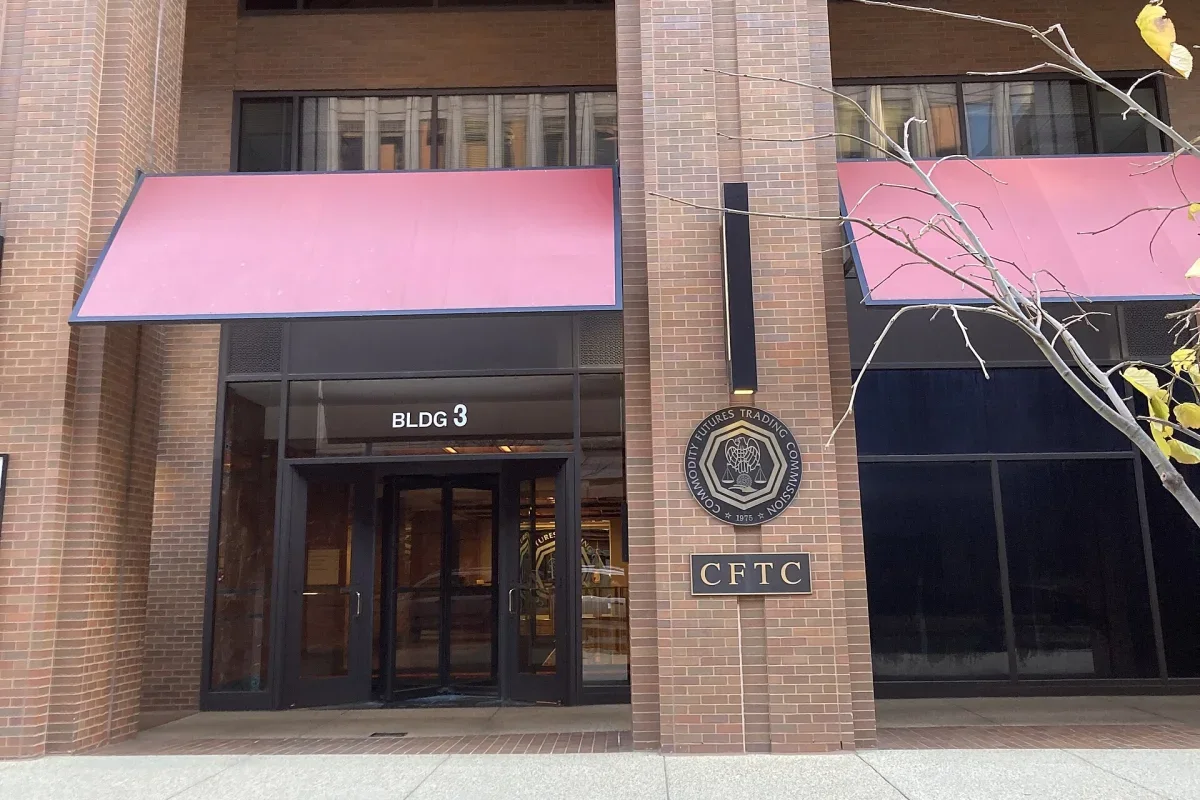
Photo: Dclemens1971 / Wikimedia Commons, CC BY 4.0 (https://commons.wikimedia.org/wiki/File:CFTC_headquarters,_Lafayette_Center.jpg)

Our platforms
The latest crypto platforms reviewed by our team.

Scellérance Review 2026: Legit or Scam? Test + Clones
Scellérance in our 2026 test: UK Ltd (CRN 15427916) under a Swiss parent (CHE-012.309.567, 2023), a £575 withdrawal in 1 h 10, three clone domains days old.

Opulendra Review 2026: Legit or Scam? Test + Clone Check
Opulendra in our 2026 test: Ontario corp 17588787, three-source AI signals, a CA$640 withdrawal in 45 minutes and why opulendra.org is not the official site.

Daybreak Trustmere Review 2026: Legit or Scam? FCA + Test
Daybreak Trustmere in our 2026 test: a UK Ltd with CRN 15858566, multi-channel signals, a £465 withdrawal test in 42 minutes and no FCA warning-list entry.

SterlingVault AI Review 2026: Scam or Legit? Registry Check
SterlingVault AI review 2026: scores 3.6/5 — FCA Register FRN 987654 verified, withdrawal test passed in 2h 35m — for UK beginners accepting market risk.

LamboledgerATOM Review 2026: Legit or Scam? Our UK Hands-On Test
LamboledgerATOM review 2026: Companies House and FCA Register checks (FRN 984613), US$250 minimum, Faster Payments withdrawals, pros, cons and who it suits.

MetreturnETH Review 2026: Scam or Legit? Canada Hands-On Look
MetreturnETH review 2026: Ontario registration, CIRO-member partner broker, US$250 minimum deposit, Interac withdrawals in minutes–2 hours, and who it suits.

NorthShield Advisory Review: Trustworthy or Not? Canada Test 2026
NorthShield Advisory review 2026: Ontario corporation check, CIRO-member partner broker, US$250 minimum, Interac payouts in minutes–2 hours, pros and cons.

Nuvaultance Review Canada: Legit Platform or Scam? Our Test
Nuvaultance review 2026: Ontario registry check, CIRO-member partner broker with CIPF cover, US$250 minimum, Interac withdrawals in minutes–2 hours, pros and cons.

VestAccrue Review 2026: Legit or Scam? A Canada Hands-On Analysis
VestAccrue review 2026: Ontario registration, CIRO-member partner broker, US$250 minimum (about CA$340), Interac withdrawals in minutes–2 hours, who it suits.