Kalshi faces a New York restraining-order hearing after a federal judge rejects the CFTC's emergency bid
A federal judge in Manhattan denied the CFTC's second emergency request to stop New York's case against Kalshi on Friday, November 20, 2026. A state judge is set to hear the attorney general's request for a temporary restraining order on Monday, November 23.
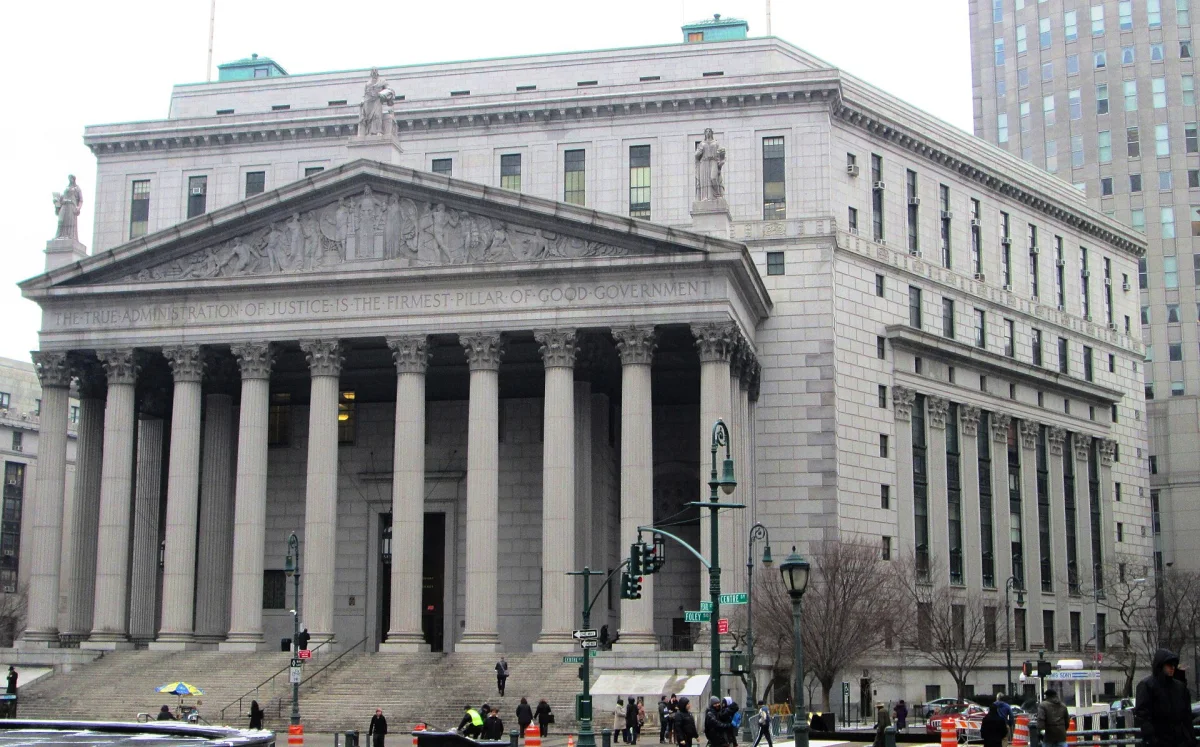
A federal judge in Manhattan on Friday, November 20, 2026, refused the Commodity Futures Trading Commission’s second emergency request to stop New York’s lawsuit against prediction market Kalshi. That clears the way for a New York state judge to hear Attorney General Letitia James’s request for a temporary restraining order (TRO) on Monday, November 23. Kalshi says the order, as drafted, could shut its federally regulated exchange for every customer, not only those in New York. The state says it is asking for nothing of the kind.
The federal court says no, again
U.S. District Judge Lorna Schofield ruled from the bench after an emergency telephone hearing on Friday evening, according to The Block. “The requested application is denied,” Schofield said, as quoted by ABC News.
The CFTC had asked the federal court to keep the state judge from ruling on the TRO. CFTC attorney Andrew Weisberg told the court: “The temporary restraining order New York seeks would completely shut down Kalshi’s operations nationwide,” ABC reported.
New York’s lawyer, Kate Rhodes Janofsky, argued there was no basis for federal intervention while a state hearing was already scheduled. “They have to put in evidence of irreparable harm. They have not done so,” she said, according to ABC.
The Block described this as the CFTC’s second failed emergency attempt to halt the state case. Separately, U.S. District Judge Vernon Broderick rejected Kalshi’s attempt to move James’s lawsuit into federal court, both The Block and ABC reported, sending it back to state court.
What New York wants on Monday
Justice Melissa Crane of the New York County Supreme Court is due to hear the TRO request on Monday. Sports-law attorney Daniel Wallach put the hearing at 11:30 a.m. ET, The Block reported.
The proposed order would bar Kalshi from running an unlicensed gambling business “within or from New York or to persons in New York,” according to The Block and CDC Gaming Reports. The Block said it would cover contracts on sports, culture, elections and other events. Both outlets reported that it would also stop Kalshi from letting users under 21 trade and from advertising on college campuses.
James first sued Kalshi on July 31, 2026, seeking a TRO, restitution, disgorgement and penalties. At the time, The Block reported that compensatory damages could total at least $36 billion.
Why Kalshi says “nationwide”
The words “from New York” are what worry Kalshi. The company is based in New York, so a ban on operating from the state could reach every customer, its lawyers argue.
Kalshi’s lawyer Sean Murphy of Milbank told the court that the order “would shut down a federally regulated exchange for every customer, everywhere,” according to The Block. ABC quoted him as warning: “The TRO would likely force the liquidation of all open positions, disrupting markets far beyond this State.”
James’s office rejected that reading. In a Friday letter, it said it “does not seek to ‘shut down a federally regulated exchange for every customer, everywhere,’” and that the order would not stop lawful futures or swaps, The Block reported. ABC’s description of the lawsuit was narrower still: it said the case “does not seek to shut Kalshi down.”
Why it matters beyond New York
The case is a direct test of who regulates event contracts. The CFTC treats Kalshi as a federally registered derivatives exchange, while New York treats its sports and other event markets as unlicensed gambling. If Crane signs a broad order, Wallach said the next step could be an emergency application to the U.S. Supreme Court, The Block reported.
The fight comes days after the CFTC itself pushed back on one Kalshi product: last week Kalshi pulled its Trump “mention” markets after the agency stayed their certification. Prediction markets are also under pressure abroad, where Australia’s regulator said retail prediction markets fail its public-interest test. For how rules differ between jurisdictions, see our crypto regulation by country guide.
For Kalshi users, the practical risk is short term. A broad order could force open positions to close. A narrow one, limited to New York residents, would mostly change who can trade.
FAQ
What did the federal judge decide?
On November 20, 2026, U.S. District Judge Lorna Schofield denied the CFTC’s emergency request to stop New York’s case against Kalshi. It was the agency’s second such attempt to fail.
What happens on Monday, November 23?
Justice Melissa Crane of the New York County Supreme Court is set to hear the attorney general’s request for a temporary restraining order against Kalshi. The proposed order targets unlicensed event contracts offered “within or from New York or to persons in New York.”
Would the order shut Kalshi down everywhere?
Kalshi’s lawyers say it would, because the company is based in New York, and that it would likely force open positions to be liquidated. New York’s attorney general says the state does not seek a nationwide shutdown.
Sources:
- The Block — “Kalshi faces Monday hearing on New York order it says would shut down its exchange nationwide” — November 21, 2026
- ABC News — “Administration tries to intervene after Kalshi is threatened with restraining order” — November 20, 2026
- CDC Gaming Reports — “Inside the latest prediction market news” — November 20, 2026
- The Block — “New York sues Kalshi over illegal gambling claims, seeks $36 billion in damages” — July 31, 2026
The bottom line
The CFTC has now failed twice to stop New York’s case in federal court, so the next ruling belongs to a state judge. Monday’s hearing turns on how far a New York order can reach. A broad order could affect Kalshi users across the US, while a narrow one would only change access in New York. The outcome had not been reported at the time of writing.
News summary based on reporting cited above, current as of November 23, 2026. Court proceedings are ongoing and positions described are the parties’ claims. For general information only. Not financial or legal advice.
Photo: Beyond My Ken / Wikimedia Commons, CC BY-SA 4.0 (https://commons.wikimedia.org/wiki/File:New_York_State_Supreme_Courthouse_60_Centre_Street_from_southwest.jpg)

Our platforms
The latest crypto platforms reviewed by our team.

Scellérance Review 2026: Legit or Scam? Test + Clones
Scellérance in our 2026 test: UK Ltd (CRN 15427916) under a Swiss parent (CHE-012.309.567, 2023), a £575 withdrawal in 1 h 10, three clone domains days old.

Opulendra Review 2026: Legit or Scam? Test + Clone Check
Opulendra in our 2026 test: Ontario corp 17588787, three-source AI signals, a CA$640 withdrawal in 45 minutes and why opulendra.org is not the official site.

Daybreak Trustmere Review 2026: Legit or Scam? FCA + Test
Daybreak Trustmere in our 2026 test: a UK Ltd with CRN 15858566, multi-channel signals, a £465 withdrawal test in 42 minutes and no FCA warning-list entry.

SterlingVault AI Review 2026: Scam or Legit? Registry Check
SterlingVault AI review 2026: scores 3.6/5 — FCA Register FRN 987654 verified, withdrawal test passed in 2h 35m — for UK beginners accepting market risk.

LamboledgerATOM Review 2026: Legit or Scam? Our UK Hands-On Test
LamboledgerATOM review 2026: Companies House and FCA Register checks (FRN 984613), US$250 minimum, Faster Payments withdrawals, pros, cons and who it suits.

MetreturnETH Review 2026: Scam or Legit? Canada Hands-On Look
MetreturnETH review 2026: Ontario registration, CIRO-member partner broker, US$250 minimum deposit, Interac withdrawals in minutes–2 hours, and who it suits.

NorthShield Advisory Review: Trustworthy or Not? Canada Test 2026
NorthShield Advisory review 2026: Ontario corporation check, CIRO-member partner broker, US$250 minimum, Interac payouts in minutes–2 hours, pros and cons.

Nuvaultance Review Canada: Legit Platform or Scam? Our Test
Nuvaultance review 2026: Ontario registry check, CIRO-member partner broker with CIPF cover, US$250 minimum, Interac withdrawals in minutes–2 hours, pros and cons.

VestAccrue Review 2026: Legit or Scam? A Canada Hands-On Analysis
VestAccrue review 2026: Ontario registration, CIRO-member partner broker, US$250 minimum (about CA$340), Interac withdrawals in minutes–2 hours, who it suits.