Democrats sweep the midterms and start drafting a crypto bill that puts the SEC back in charge
After winning both chambers of Congress on November 3, House Democrats are reportedly preparing a market-structure bill for 2027 that would widen SEC oversight, narrow the CFTC's remit and restrict officials' crypto dealings — replacing the stalled CLARITY Act.
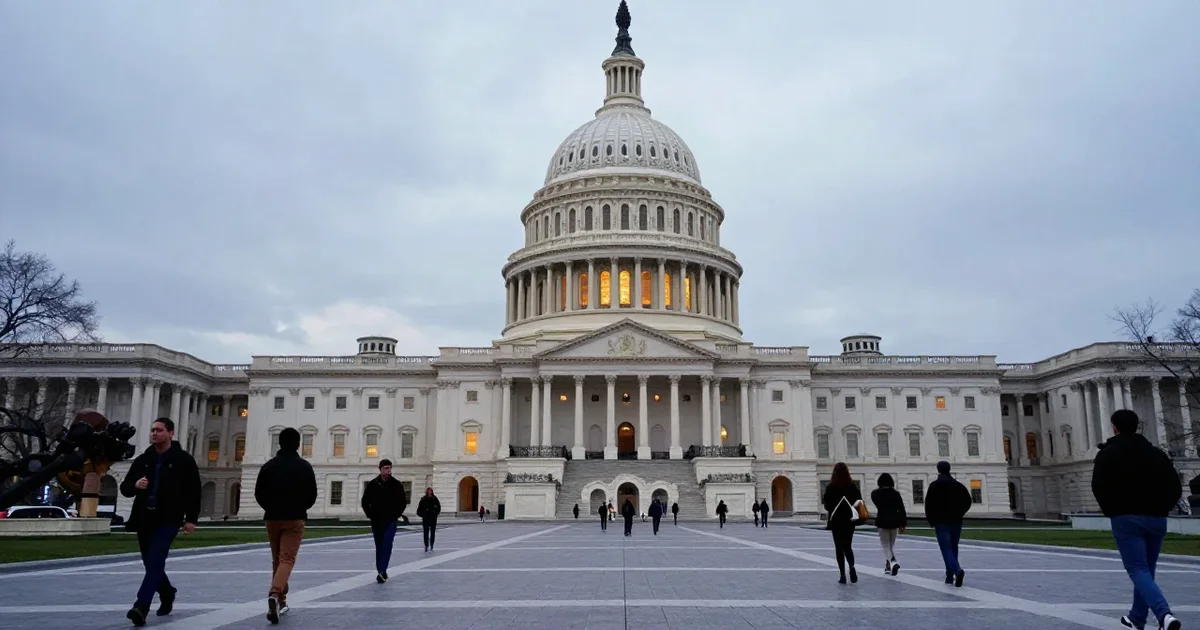
The November 3 midterms have redrawn the map for US crypto policy. Democrats won control of both the House and the Senate and will take over when the new Congress convenes in January 2027, according to FXStreet. Within a day of the result, reports emerged that House Democrats are already sketching a crypto market-structure bill of their own — one that would look very different from the Republican-led CLARITY Act that died in the Senate in September.
What is being drafted
The plan was first reported by journalist Eleanor Terrett, who cited three industry sources who had spoken with Democratic staffers, per crypto.news. The idea is to take the “Crypto Investor and Consumer Bill of Rights” — an amendment Rep. Maxine Waters tried to attach to CLARITY in 2025 — and expand it into a full market-structure framework, folding in Democratic amendments the House rejected and provisions Senate Democrats had negotiated with Republicans.
Two themes stand out. First, the Securities and Exchange Commission would get a larger supervisory role over crypto markets, while the Commodity Futures Trading Commission’s remit would be narrower — the reverse of CLARITY’s tilt toward the CFTC. Second, ethics provisions would likely restrict crypto-related business by President Donald Trump and other federal officials, an issue Democrats said CLARITY never adequately resolved. Republicans, according to Terrett’s reporting, have dismissed the effort as a “messaging bill”.
The consumer rules on the table
The Waters amendment gives a concrete preview of what Democrats want written into law. The nine-page text summarised by crypto.news would require platforms to honour cash withdrawals or transfers within 24 hours (barring documented fraud concerns), offer live human support with waits capped at five minutes, keep customer assets in bankruptcy-remote accounts, obtain revocable consent before lending, staking or reusing customer assets, publish monthly cryptographically verifiable reserve reports attested by a licensed accountant, and notify customers of breaches within 48 hours. The package also proposed SIPC-comparable protection, fiduciary duties, best-execution requirements and funding for both the SEC and CFTC.
Several of those ideas — fast withdrawals, segregated assets, verifiable reserves — map directly onto what went wrong in past exchange collapses, and onto the questions users are asking again after October’s Binance breach. Our guide to how crypto is regulated country by country shows how other jurisdictions have already legislated some of them.
Why CLARITY is out of road
The Digital Asset Market Clarity Act, sponsored by Rep. French Hill, passed the House in July 2025 with 216 Republicans and 78 Democrats in favour and would have split oversight between the SEC and the CFTC. In the Senate, a September 15 procedural vote to begin consideration failed 49–50 against a 60-vote threshold, with four Republicans joining Democrats in opposition, per FXStreet. Republican sponsors said their final draft included 126 substantive changes requested by Democratic negotiators; Democrats still objected on conflict-of-interest grounds, and banking groups warned that reward-paying crypto products could pull deposits away from traditional lenders.
crypto.news notes one procedural wrinkle: Sen. Thom Tillis voted no for procedural reasons, which technically preserves a path to reconsideration. In practice, with control of both chambers changing hands in January, the bill as written cannot advance in the current Congress.
Regulators are not waiting
In the vacuum, the agencies have moved on their own. The SEC’s “Regulation Crypto Assets” proposal from August 2026 — a safe harbor meant to keep certain token issuers outside the definition of an investment contract, plus exemptions for smaller offerings and revised disclosure rules — drew about 140 public comments before its window closed in October, according to Cointelegraph. Legal experts quoted there cautioned that rules adopted this way are easier to overturn than an act of Congress. Former CFTC chairman J. Christopher Giancarlo, cited by crypto.news, has argued both agencies can keep building digital-asset frameworks under existing authority.
The one piece of federal crypto law already on the books is the GENIUS Act, the payment-stablecoin framework signed on July 18 — see our coverage of how the Treasury’s GENIUS Act rule hands much of the oversight to state regulators. Market participants will also be watching committee assignments: Sen. Elizabeth Warren is widely expected to chair the Senate Banking Committee from January, though that appointment is not yet final.
The bottom line
The CLARITY Act is effectively dead, and the next US market-structure bill will be written by Democrats who favour the SEC, stricter consumer protections and explicit limits on officials’ crypto interests. Nothing has been introduced yet, and details are reportedly still unsettled — but the direction is clear enough that exchanges and token issuers should plan for a tougher federal regime from 2027, with agency rulemaking filling the gap in the meantime.
News summary based on the reporting cited above, current as of November 6, 2026. The Democratic proposal is a reported plan, not filed legislation; verify specifics against congressional records and official statements before acting. For general information only; not legal or financial advice.
Our platforms
The latest crypto platforms reviewed by our team.

Scellérance Review 2026: Legit or Scam? Test + Clones
Scellérance in our 2026 test: UK Ltd (CRN 15427916) under a Swiss parent (CHE-012.309.567, 2023), a £575 withdrawal in 1 h 10, three clone domains days old.

Opulendra Review 2026: Legit or Scam? Test + Clone Check
Opulendra in our 2026 test: Ontario corp 17588787, three-source AI signals, a CA$640 withdrawal in 45 minutes and why opulendra.org is not the official site.

Daybreak Trustmere Review 2026: Legit or Scam? FCA + Test
Daybreak Trustmere in our 2026 test: a UK Ltd with CRN 15858566, multi-channel signals, a £465 withdrawal test in 42 minutes and no FCA warning-list entry.

SterlingVault AI Review 2026: Scam or Legit? Registry Check
SterlingVault AI review 2026: scores 3.6/5 — FCA Register FRN 987654 verified, withdrawal test passed in 2h 35m — for UK beginners accepting market risk.

LamboledgerATOM Review 2026: Legit or Scam? Our UK Hands-On Test
LamboledgerATOM review 2026: Companies House and FCA Register checks (FRN 984613), US$250 minimum, Faster Payments withdrawals, pros, cons and who it suits.

MetreturnETH Review 2026: Scam or Legit? Canada Hands-On Look
MetreturnETH review 2026: Ontario registration, CIRO-member partner broker, US$250 minimum deposit, Interac withdrawals in minutes–2 hours, and who it suits.

NorthShield Advisory Review: Trustworthy or Not? Canada Test 2026
NorthShield Advisory review 2026: Ontario corporation check, CIRO-member partner broker, US$250 minimum, Interac payouts in minutes–2 hours, pros and cons.

Nuvaultance Review Canada: Legit Platform or Scam? Our Test
Nuvaultance review 2026: Ontario registry check, CIRO-member partner broker with CIPF cover, US$250 minimum, Interac withdrawals in minutes–2 hours, pros and cons.

VestAccrue Review 2026: Legit or Scam? A Canada Hands-On Analysis
VestAccrue review 2026: Ontario registration, CIRO-member partner broker, US$250 minimum (about CA$340), Interac withdrawals in minutes–2 hours, who it suits.